Balifor Americans

Travel Insurance for Bali: The Scooter and Evacuation Fine Print

Two clauses decide whether travel insurance helps in Bali: scooters and medical evacuation. What Indonesian law and the State Department say, and what to ask an insurer.

Editorial
Written and checked for American travelers
·5 min read·
Travel Insurance for Bali: The Scooter and Evacuation Fine Print
On this page
  1. 01Why insurance matters more in Bali
  2. 02The scooter clause
  3. 03The evacuation clause
  4. 04Medical cover and how claims work
  5. 05Cancellation, delays and belongings
  6. 06What this decision actually sits inside
  7. 07FAQ

Travel insurance for Bali is worth buying, and two clauses decide whether it helps: the one about riding a scooter and the one about medical evacuation. The State Department highly recommends travel insurance for Indonesia and strongly recommends cover for evacuation. Our advice is to read those two sections of a policy before you pay.

Why insurance matters more in Bali

Travel insurance matters in Bali because medical care there is paid for by the patient. The State Department says medical care is not free in Indonesia, that hospitals and doctors often require payment or a sizable deposit upfront, and that most US health plans do not cover expenses abroad. Medicare and Medicaid do not pay bills abroad at all.

You pay first

The State Department notes that a traveler who buys supplemental insurance is responsible for seeking reimbursement from the provider. Insurance in Bali is therefore usually a way of getting money back, not a card that makes a bill disappear. The same guidance says most care providers accept only cash.

What we will not tell you

We cannot say what any insurer will or will not pay, and we name no company and quote no premium. Policies differ, and the wording of your own policy is the only authority on your cover. What follows is a list of the questions that the facts of a Bali trip make worth asking.

The scooter clause

The scooter clause is the first thing to read, because of how Indonesian law treats licenses. The law requires every driver to hold a license matching the type of vehicle driven, and it has a separate class for motorcycles. The State Department adds that a US driver's license alone is not recognized in Indonesia.

Why the license matters to a policy

A policy may make cover for a motorbike accident depend on the rider being licensed for that vehicle. We are describing a type of condition to look for, not your policy. The question to put to an insurer in writing is direct: am I covered riding a scooter in Indonesia with the license and permit I actually hold?

The legal position without the right license

Riding without the required license is an offense in itself in Indonesia, carrying up to 4 months' detention or a fine of IDR 1,000,000 for riding without the required license. Bali's rules for visitors also require a valid license and a helmet. Ask your insurer how the policy treats an accident in which the rider was breaking local law.

Other conditions to look for

A policy that covers motorbikes may attach further conditions. Look for wording about helmets, engine size, riding as a passenger, and alcohol. Indonesian law requires a helmet for rider and passenger alike. Read each condition as a question about how you really plan to get around.
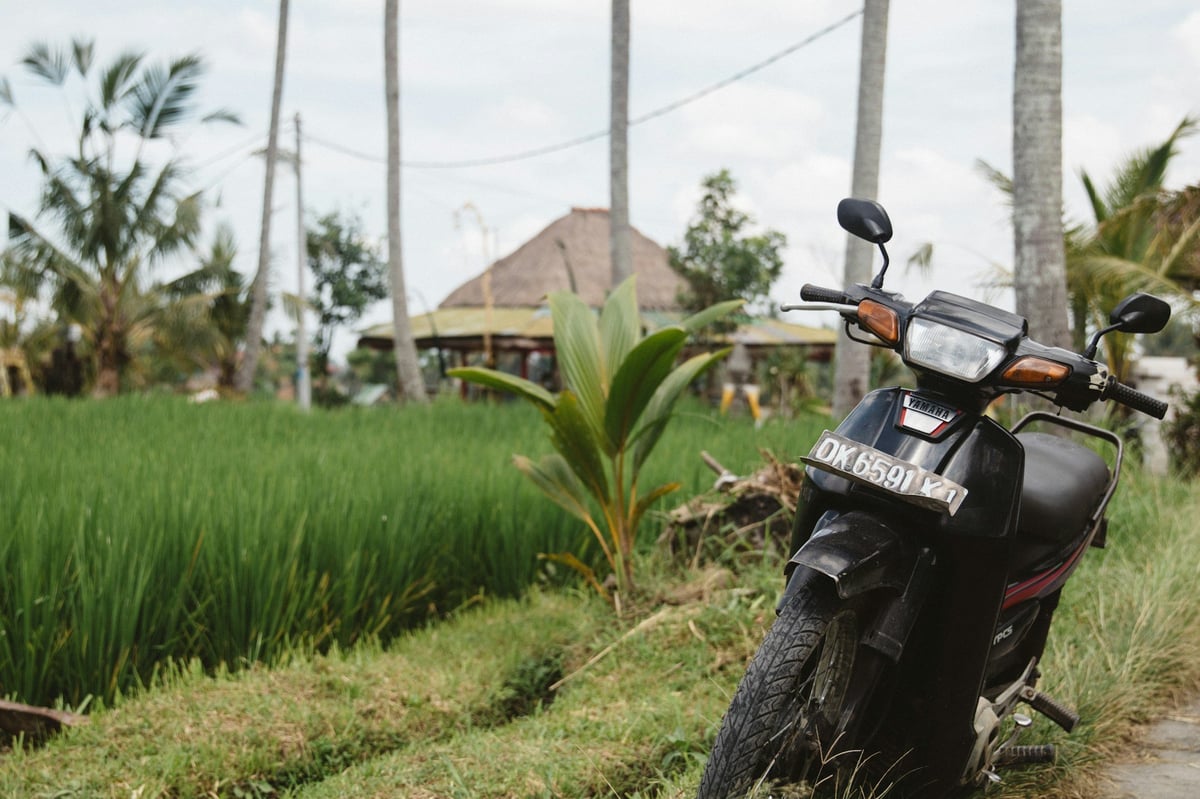
A motorbike parked beside a rice field in Bali

The evacuation clause

Medical evacuation is the second clause to read, and the State Department gives the reason. It says the US government strongly recommends supplemental insurance to cover medical evacuation, that an injured traveler will likely need to go to a major city for appropriate care, and that most foreigners with the resources leave Indonesia for anything beyond basic procedures.

What to check

Our advice is to look for three things in the evacuation section: what medical situation triggers it, who makes the decision, and where the policy would take you. Check too whether the policy covers transfers between hospitals, since the State Department says patients must cover all costs of transfer to or between hospitals.

The assistance line

Our advice is to find the assistance phone number in your policy, save it in your contacts and on paper, and give it to the person you are traveling with. Call it early in any hospital visit, before a decision has to be made in a hurry, and ask how an evacuation would be authorized.


Medical cover and how claims work

Medical cover on a travel policy is used through a claim, and a claim is made of paperwork. The State Department advises checking with your insurer about evacuation assistance, medical insurance and trip cancellation coverage before you travel. Ask at the same time how a claim is filed and what documents it needs.

Documents to collect

These are our own suggestions for any medical visit abroad: the doctor's report, an itemized bill, proof of payment, and a police report if an accident or theft was involved. After a road accident, the State Department's guidance is to stay at the scene and notify the police, which also produces the record a claim will ask for.

Pre-existing conditions and activities

Two more sections deserve a slow read. One is the treatment of medical conditions you already have. The other is the list of activities the policy excludes or charges extra for, so look there for diving, surfing, trekking and motorbikes. Match the list against what you intend to do.

Cancellation, delays and belongings

Travel insurance also covers the non-medical ways a trip goes wrong, and Bali has its own versions. We know of no nonstop flight from the United States to Bali, so the journey includes a connection that can be missed. The State Department also describes pickpocketing, vehicle theft and snatch-and-grab robberies as common in Indonesia.

Theft

Ask your insurer whether a theft claim needs a police report, and get one if it does. Phones are the item the State Department singles out, advising travelers to be mindful near roadways where snatch-and-grab crimes occur. Check the limit your policy sets for a single item, which may be lower than the price of a phone.

Natural events

The State Department's advisory for Indonesia, at Level 2, Exercise increased caution, cites natural disasters among its reasons. Ask how the policy treats volcanic ash, earthquakes and cancelled flights, and whether cover depends on buying the policy before an event is announced.

What this decision actually sits inside

Notice what happened across all of this. The policy turned out to be the last link in a chain that starts somewhere else: with the license in your wallet, the permit you did or did not get before leaving, whether you rent a scooter at all, and how far your base is from a hospital. An insurance question became a transport question and a where-to-stay question.

How those links connect, and which of them you can settle before you book, is worked through in the complete Bali trip guide.

FAQ

Do I need travel insurance for Bali?

The State Department highly recommends travel insurance for Indonesia and strongly recommends cover for medical evacuation. Most US health plans do not cover care abroad.

Does travel insurance cover scooter accidents in Bali?

It depends on your policy's wording. Ask your insurer in writing whether you are covered with the license and permit you hold, since Indonesian law requires a license matching the vehicle.

Does Medicare work in Bali?

No. The State Department says US Medicare and Medicaid do not cover expenses or bills abroad.

Will the hospital bill my travel insurance directly?

Do not count on it. The State Department says travelers with supplemental insurance are responsible for seeking reimbursement, and that most providers accept only cash.

Keep planning
Not sure how it all fits together?

Pick your trip length and we'll route a real day-by-day plan.

Build your trip →