Bali runs on rupiah, and you need both cards and cash. How to change money safely, what cards work, why US apps cannot pay by QR, and what gets added to every bill.
Editorial Written and checked for American travelers
Bali runs on rupiah, and a visitor needs both a card and cash to get through a day comfortably. Plan on a card for the larger purchases and rupiah notes for the small ones. The rules around money are few, but each one costs a little if you ignore it, and this page sets them out in order.
The currency, and the rule about using it
The currency in Bali is the Indonesian rupiah, and prices are quoted in thousands and millions of it. Bali's 2025 rules for foreign visitors require transactions to be made in rupiah, so a price offered in US dollars is not how you should expect to pay. Carry rupiah for small purchases and a card for larger ones.
Getting used to the zeros
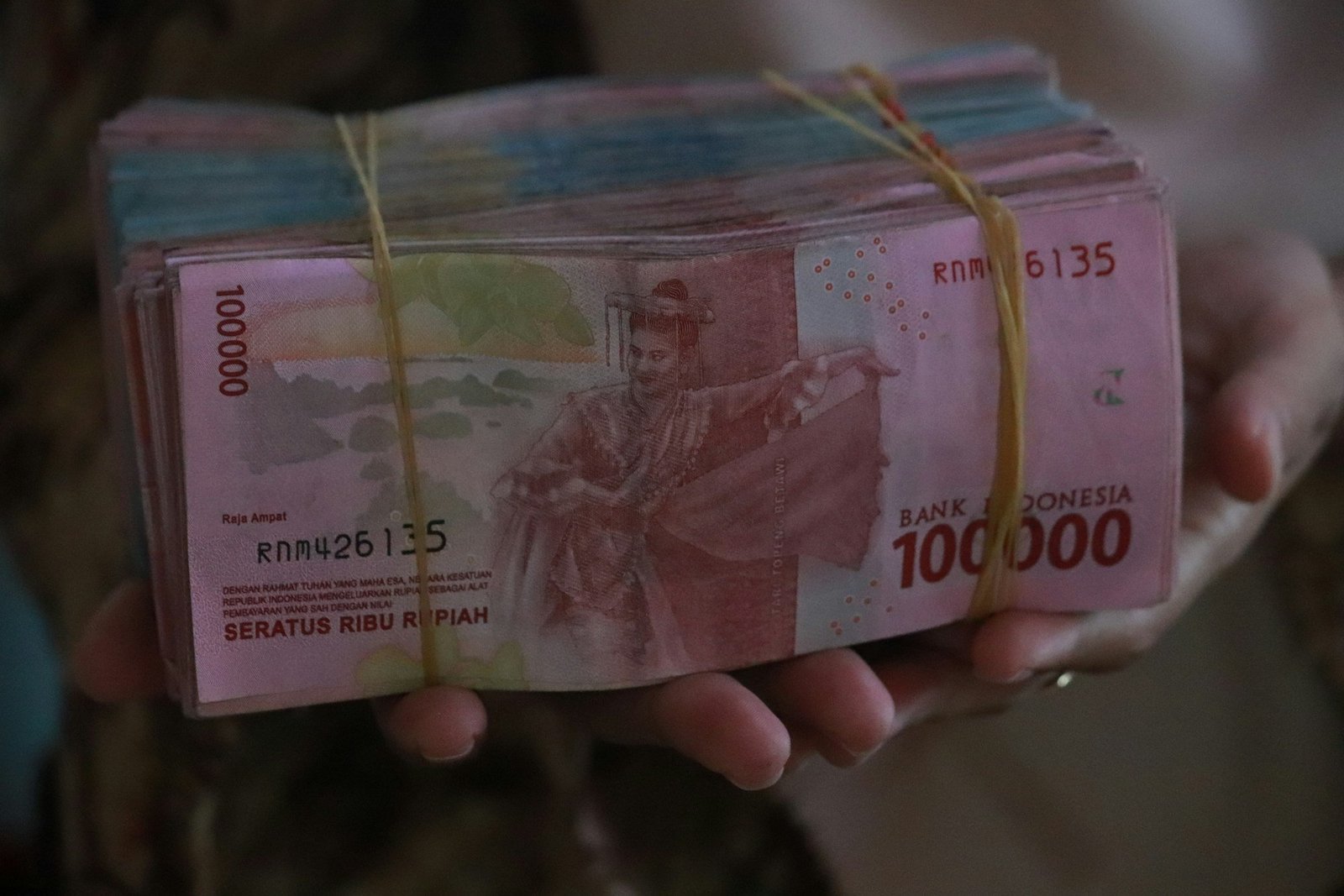
Rupiah amounts are large numbers: Bali's tourist levy, for example, is IDR 150,000 per person. Prices are sometimes written with the thousands dropped, as "150" or "150K". Count the zeros before you hand over notes; a 10,000 and a 100,000 note differ by one digit and a factor of ten.
Do not freeze an exchange rate in your head
The rupiah moves against the dollar, so check the rate when you travel instead of relying on a figure from an old article. Check the current rate on the day you travel and work out one easy rule of thumb for yourself, such as what 100,000 rupiah is worth in dollars this week.
100 USD ≈ … IDR (enable JavaScript to see today's rate)
Changing money without losing any
Bali's rules for visitors say to change money only at a licensed changer, and they describe how to recognize one. The 2025 circular tells foreign tourists to exchange currency only at authorized money changers, bank or non-bank, which are identified by a license number and a Bank Indonesia logo carrying a QR code.
What to look for
Look for the license number and the Bank Indonesia QR logo displayed at the counter before you hand anything over. A booth that cannot show them is not one the rules allow you to use, whatever rate it advertises on the board outside.
Our advice at the counter
This part is advice, not regulation. Agree the amount before the notes are counted, count the rupiah yourself in front of the cashier, and be the last person to touch the stack before it goes into your wallet. Do not let anyone recount it for you after you have checked it.
Cards and ATMs
Cards are the practical way to pay for the large items of a Bali trip, and a US card works for the official payments too. Indonesia's e-visa site takes Visa, Mastercard and JCB, and Bali's tourist levy site takes Visa, Mastercard, American Express and JCB. Bring at least two cards on different networks, kept in different bags.
Foreign transaction fees
Prices in Bali are charged in rupiah, so check before you leave whether your card adds a foreign transaction fee, and how much. Our advice is to carry a card that does not. When a terminal offers to charge you in dollars instead of rupiah, our advice is to choose rupiah and let your own bank do the conversion.
ATMs
We have not found an official source for withdrawal limits or operator fees at Bali's ATMs, and the figures in travel blogs disagree with each other, so we are not going to quote one. The part you can check before you go is your own bank's fee schedule for withdrawals abroad, and our advice is to read it.
Paying by QR code
QR payment is Indonesia's national standard, and Bali's rules for visitors tell tourists to use it, but the cross-border version is not open to American banking apps. Bank Indonesia's cross-border QR scheme connects Thailand, Malaysia, Singapore, Japan, South Korea and China. The United States is not on that list.
For an American visitor that leaves cards and cash as the two working methods. The QR question has a page of its own, including what the central bank says and what it does not.
What gets added to the bill
Restaurant and hotel bills in Bali carry a local tax, and may also carry a separate service charge. In Badung regency, which covers Kuta, Seminyak, Canggu, Uluwatu and Nusa Dua, the local tax on restaurant food and drink and on hotel stays is 10%. Gianyar regency, which includes Ubud, sets the same rate.
Tax versus service charge
The two lines on a bill are different things. The tax goes to the local government. A service charge, under an Indonesian labor regulation covering hotels and hotel restaurants, is an amount added on top of the listed price for service, and it must be distributed to the staff. The regulation sets no percentage, so the rate is whatever the business has chosen.
Read the menu's small print
A menu or room rate may be quoted before tax and service. Our advice is to look for a line at the bottom of the menu saying whether prices include them, so the total does not surprise you.
Carrying cash across the border
Cash is not capped when you enter or leave Indonesia, but large amounts must be declared. Customs requires a declaration for money or other payment instruments worth IDR 100,000,000 or more, in rupiah or the foreign-currency equivalent. That is far more than a vacation calls for, so for most travelers the rule is one to know exists.
What this decision actually sits inside
Notice what happened across all of this. No single item was large: a foreign transaction fee, a conversion offered at the terminal, a tax line, a service line, a changer's rate. Each one is a small percentage, and they stack on the same dollar. The trip's real cost is the listed prices plus that stack, and the stack is decided by choices made at home: which cards you carry and what your bank charges.
How those small percentages add up across a whole trip, and which ones you can remove before you leave, is worked through in Bali, in Its Own Time.
FAQ
Can I use US dollars in Bali?
Bali's rules for foreign visitors require transactions to be made in rupiah. Change dollars at a licensed money changer or withdraw rupiah from an ATM.
Can I use my credit card in Bali?
US cards work on the official visa and tourist levy sites, and a card is the practical way to pay for larger purchases. Carry rupiah cash for small ones.
How do I know a money changer in Bali is legitimate?
Authorized changers display a license number and a Bank Indonesia logo with a QR code. Bali's rules tell visitors to use only those.
Is tax included in restaurant prices in Bali?
Often not. In Badung and Gianyar regencies the local tax on restaurant food and drink is 10%, and many businesses add a separate service charge.