Galungan comes every 210 days and fills Bali's roads with bamboo penjor. What the festival means, the 2027 dates, and why it does not close the island like Nyepi.
Editorial Written and checked for American travelers
Galungan is the Balinese festival marking the victory of good over evil, and Kuningan closes it ten days later. The pair comes around every 210 days, so it falls twice in most calendar years and its dates move. In 2027 Galungan is on January 13 and again on August 11. Neither day is a national holiday, and neither carries the restrictions that Nyepi does.
What Galungan celebrates
Galungan marks the victory of dharma over adharma, which is usually put in English as good over evil. Balinese families pray at home and at their temples, and the belief is that ancestral spirits visit during the festival period. It is a family occasion first, held in household compounds and village temples all over the island.
The penjor
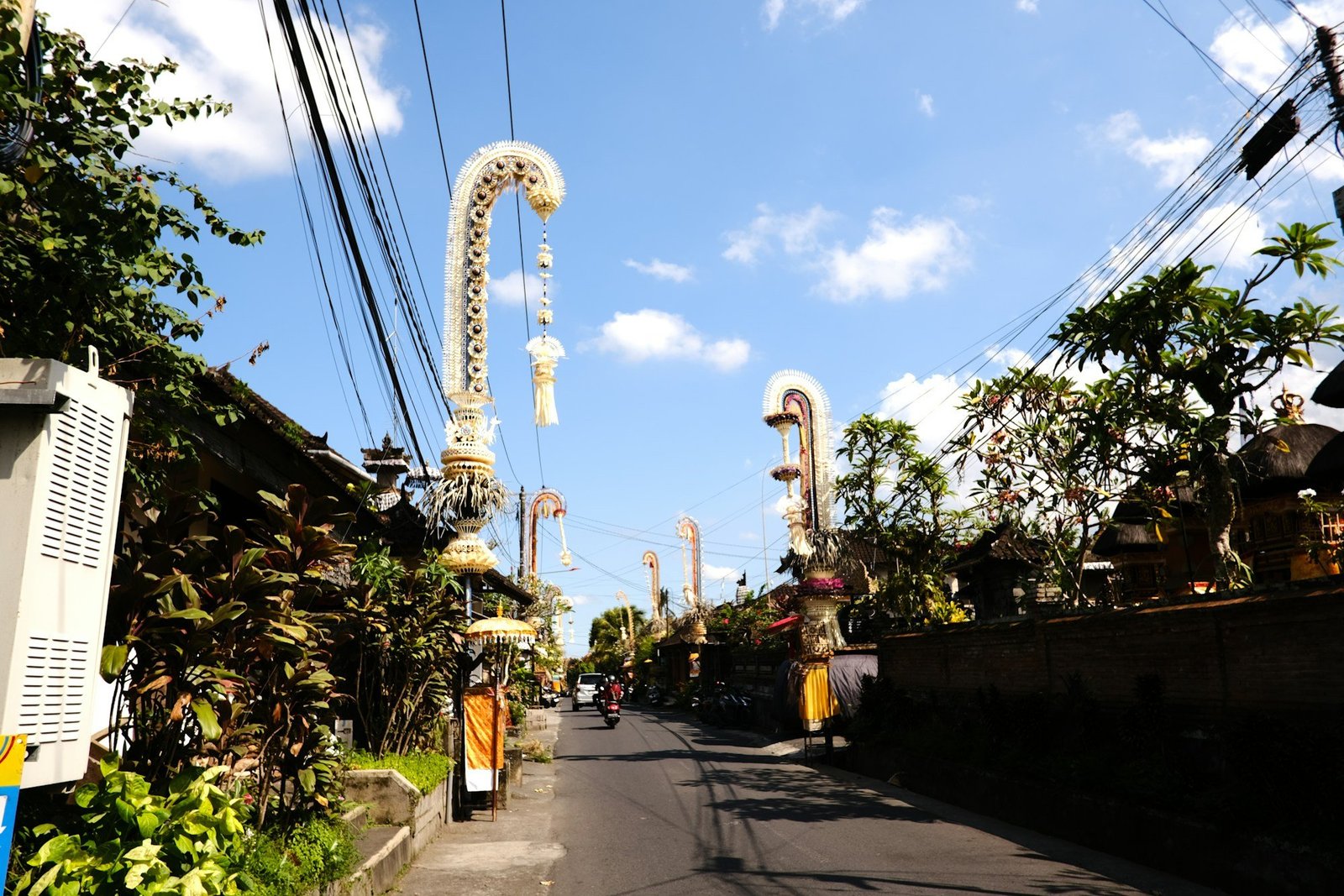
The sign of Galungan that every visitor notices is the penjor, a tall curved bamboo pole decorated with produce and set up outside homes. A penjor stands as a symbol of gratitude. Set up outside each home for the festival, they are its most visible sign.
Kuningan
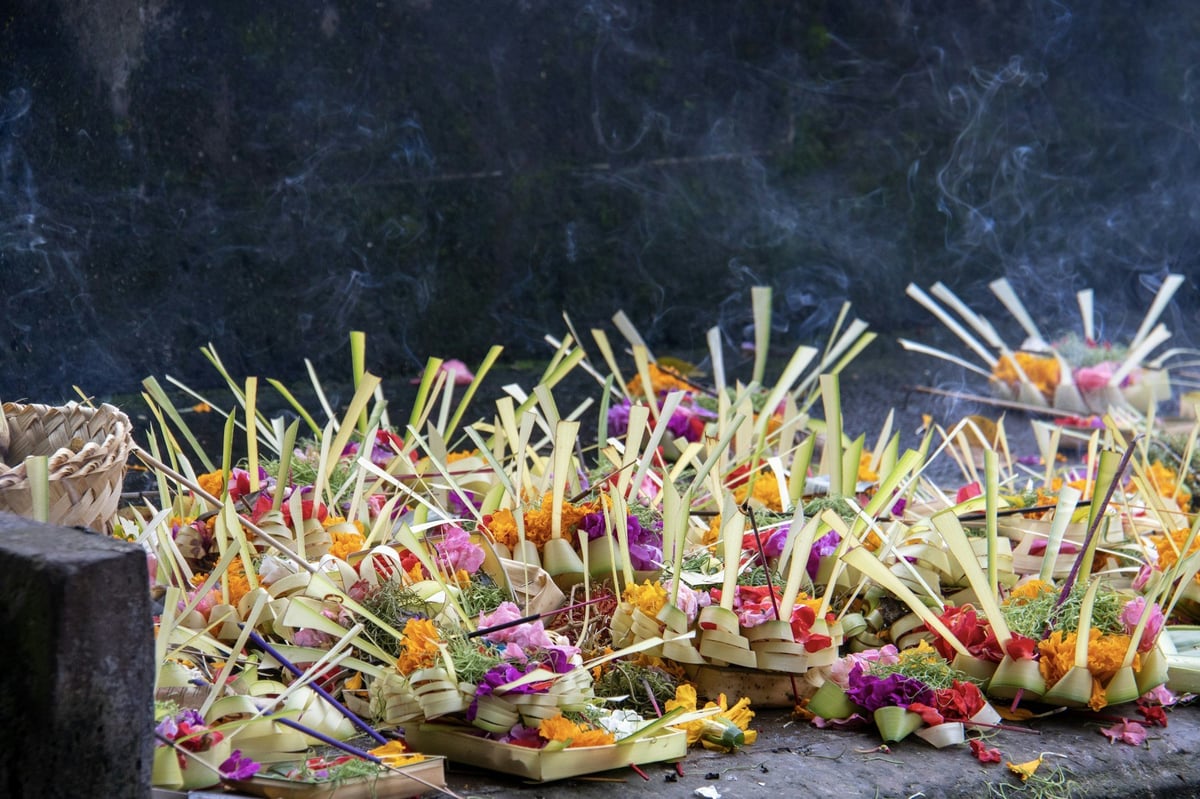
Kuningan falls ten days after Galungan and closes the festival. In 2027 it is on Saturday, January 23, and on Saturday, August 21. Families make offerings again on Kuningan, and the ten days between the two dates are part of one festive period.
When Galungan and Kuningan fall
Galungan follows the Balinese Pawukon calendar, which has a cycle of 210 days, so the festival does not sit on a fixed date in the Western calendar. It comes about every seven months. That means two Galungans in most years, and a festival that lands in a different month from one year to the next.
The 2027 dates
In 2027 Galungan falls on Wednesday, January 13, with Kuningan on Saturday, January 23. The second pair of the year is Wednesday, August 11, and Saturday, August 21. We took these dates from published Balinese calendar listings for 2027, which agree with each other; check a current calendar for any later year.
The day before
The day before Galungan is called Penampahan, and it is the day of preparation, when families cook and finish the offerings and decorations. For a visitor, the day before and the day itself are the two days when the festival is most visible.
Is Bali open during Galungan?
Galungan and Kuningan are not on Indonesia's list of national holidays, and we have found no official restriction on visitors attached to either day. The measures documented for Nyepi, the day of silence, belong to Nyepi alone. What changes during Galungan is that Balinese families are at home or at the temple, so individual businesses may keep different hours.
Do not confuse it with Nyepi
Nyepi is the one day of the Balinese year that stops the island, and it is a separate festival on a different calendar. In 2027 Nyepi is on Monday, March 8, 2027. The restrictions documented for Nyepi do not apply to Galungan.
What we cannot tell you
We have not found an official source on which businesses close for Galungan or how traffic changes, so we will not describe either as fact. If a particular restaurant, driver or tour matters to your plans on January 13 or August 11, 2027, ask them directly whether they are working that day.
How to be a good guest during Galungan
A visitor in Bali during Galungan is welcome to watch, and the island's rules for tourists set the limits. Bali's circular for foreign visitors requires modest dress and polite conduct in sacred areas, and it bars tourists from the inner and middle courtyards of a temple unless they are there to pray in Balinese traditional dress.
Dress for it
Our advice is to dress on Galungan as you would for a temple visit, with shoulders and knees covered, even if you are only walking through a village. You may pass family ceremonies along the way. A sarong and a sash in your bag let you accept an invitation if one comes.
On the road
If you meet a procession on the road, our advice is to treat it as having the right of way. Wait for it to pass, keep the engine noise down, and do not push through on a scooter. This is our advice, not a published rule, and it is the difference between watching the festival and being in its way.
Photographs
The penjor and the decorated streets are yours to photograph. People at prayer are a different matter. Ask first, keep your distance, and never climb on a shrine or a wall for a better view. Bali's rules prohibit climbing on sacred structures and indecent posing at sacred sites.
Planning a trip around Galungan
Galungan is a good reason to choose one week over another, since the penjor are up along the roads and no official restriction on visitors applies. The planning question is a small one: which of your days need a specific person, such as a driver or a guide, and whether that person is working.
Our advice on booking
Book drivers and guided activities for the Galungan and Kuningan dates ahead of time and confirm them a few days before. Keep the day of Galungan itself light: a morning in a village or in Ubud's back streets looking at the penjor is a better use of it than a long itinerary.
The wider calendar
Galungan is one of several dates that move through the Balinese and Indonesian calendars every year, and some of the others do close things. How those dates fall against a trip is worked through in Bali, in Its Own Time.
FAQ
What is Galungan in Bali?
Galungan is a Balinese Hindu festival marking the victory of dharma over adharma, or good over evil. It comes every 210 days, and Kuningan follows ten days later.
When is Galungan in 2027?
Wednesday, January 13, and Wednesday, August 11. Kuningan follows on January 23 and August 21.
Is everything closed in Bali during Galungan?
Galungan is not a national holiday, and we have found no official restriction on visitors for it. Ask individual businesses whether they are working that day.
What are the bamboo poles in Bali?
They are penjor, curved bamboo poles decorated with produce and set up outside homes for Galungan as a symbol of gratitude.