Balifor Americans

Bali's Areas Explained: Which Part of the Island Is Which

Bali's six regions in plain terms: the resort south, Ubud and the hills, the quiet east and north, the far west, and the Nusa islands, with road distances between them.

Editorial
Written and checked for American travelers
·5 min read·
Bali's Areas Explained: Which Part of the Island Is Which
On this page
  1. 01The six parts of Bali
  2. 02South Bali: the beach resorts
  3. 03Central Bali: Ubud and the hills
  4. 04East and North Bali: the quiet coasts
  5. 05The southeastern islands
  6. 06What this decision actually sits inside
  7. 07FAQ

Bali divides into six parts for a visitor: the built-up south, Ubud and the central hills, the quiet east, the north coast, the far west, and three small islands off the southeast shore. The island is about 89 miles from east to west and 50 from north to south. Most first trips happen in the south and around Ubud, which are about 22 miles from the airport to Ubud apart.

The six parts of Bali

Bali's regions, as travel guides divide them, are South Bali, Central Bali, East Bali, North Bali, West Bali and the southeastern islands. The south holds the airport and most of the hotels. The center holds Ubud and the mountain lakes. The east and north are quieter coasts, and the west is the least visited.

Why the map misleads

The island is small, and a first-time visitor reads the map as a place where everything is a short drive away. In miles that is true. In hours it is not, because the roads are narrow and busy. Choosing where to stay in Bali is really choosing which of these regions you will see without a long drive.

The island, by where you would sleep: Seminyak & Canggu · Uluwatu & the Bukit · Sanur · Ubud · Sidemen · Amed · Munduk & the north · Nusa Lembongan · Nusa Penida. (Enable JavaScript for the interactive map.)

South Bali: the beach resorts

South Bali is the most visited part of the island, and it is several different places sharing one coast. Travel guides describe Kuta as the most heavily developed area, Seminyak as quieter and more upscale, Canggu as a fast-developing stretch of surf beaches and rice fields, and Sanur and Nusa Dua as the calmer resort areas on the other shore.

The west-facing strip

Kuta, Legian, Seminyak and Canggu run north from the airport along the west-facing coast, in that order. The airport is about 4 miles from Kuta, 7 from Seminyak and 12 from Canggu. This is where the sunset beaches, the restaurants and the nightlife are concentrated, and where the traffic is heaviest.

The Bukit peninsula

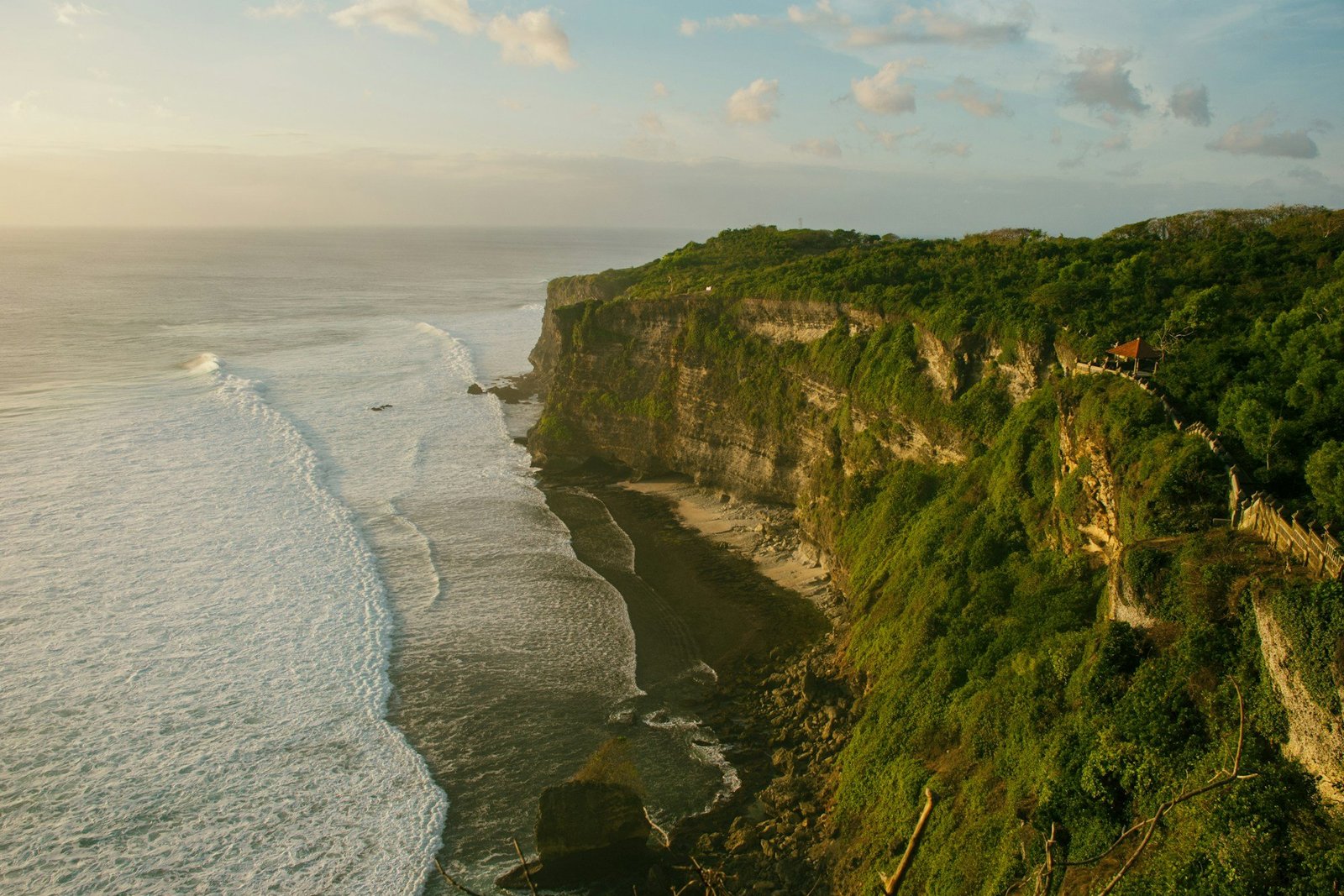
The Bukit is the limestone peninsula at the island's southern tip, below the airport. Travel guides describe it as rugged, with white sand beaches under cliffs and the temple of Uluwatu on a cliff edge. Uluwatu is about 13 miles from the airport. Jimbaran, at the neck of the peninsula, is known for its sheltered beach.

The east-facing resorts

Sanur and Nusa Dua face east, away from the sunset coast. Travel guides describe Sanur as a mature resort town popular with families and older visitors, and Nusa Dua as an enclave of high-end resorts with little traffic. Sanur is about 11 miles from the airport and Nusa Dua about 8. Boats to the small islands leave from Sanur.
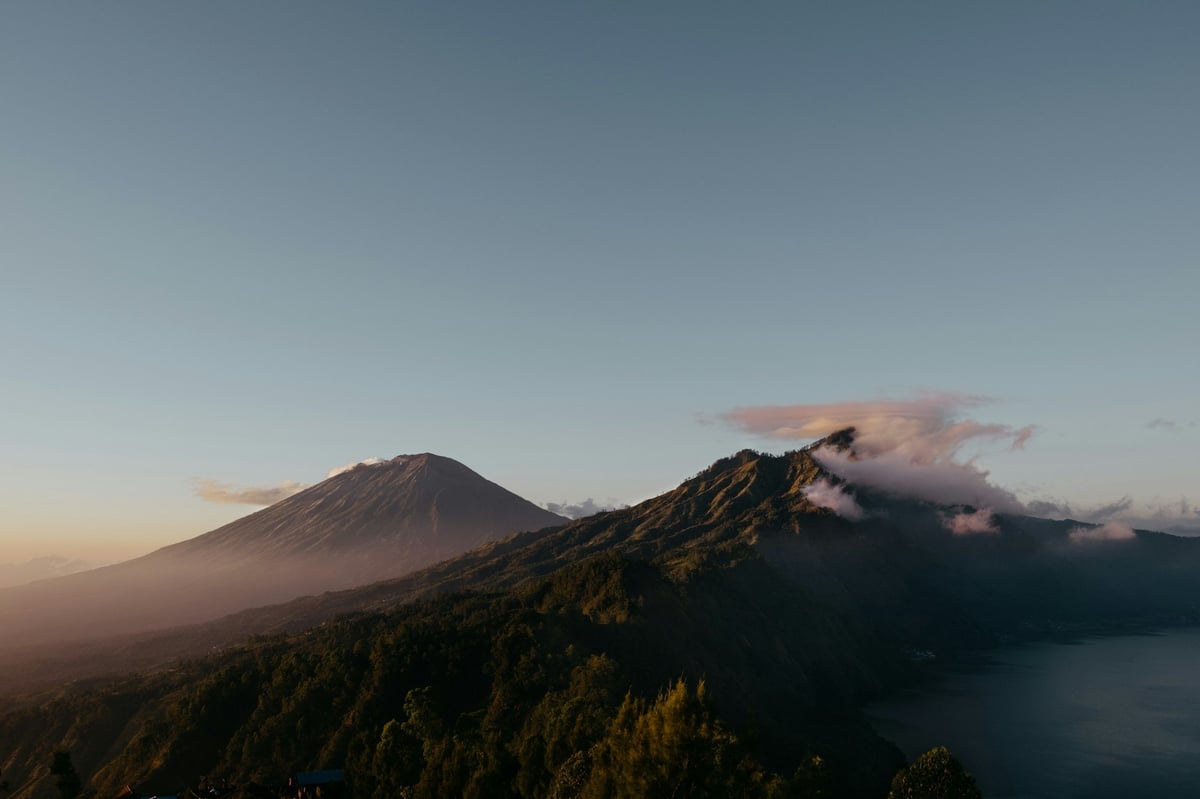
A volcano rising above mist and forested ridges in Bali

Central Bali: Ubud and the hills

Central Bali is the island's cultural heart, in the words of the travel guides, and it contains the central mountain range. Ubud is its main town, sitting at about 200 meters above sea level and regarded as the center of Balinese arts. It is inland, with no beach, and cooler than the coast.

Around Ubud

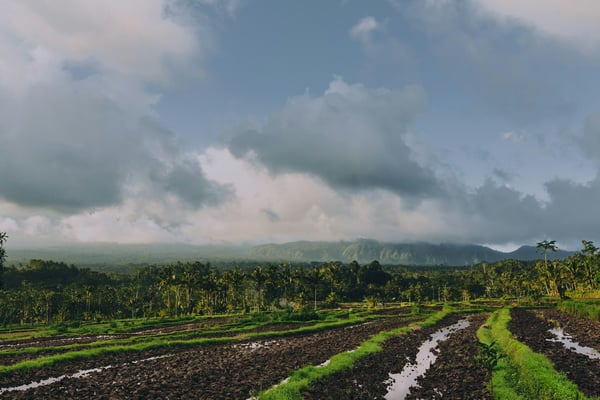
Ubud is surrounded by villages and rice terraces. The Tegallalang terraces are about 6 miles to the north, and the crater rim at Kintamani, overlooking the active volcano Mount Batur, is about 27 miles away. Bali's rice-terrace landscape and its water temples are a UNESCO World Heritage site, inscribed in 2012.

The mountain lakes

Higher up, in the central mountains, travel guides describe Bedugul as an area of lakes, a botanical garden and the lakeside temple of Ulun Danu Bratan. Munduk lies further on, about 39 miles from Ubud by road. The air is cooler at altitude, and the pace is slower.
East and North Bali: the quiet coasts

East Bali and North Bali are the island's quieter coasts, described by travel guides as laid-back fishing villages and black sand beaches under the island's highest mountain, Mount Agung. They are further from the airport: Amed, on the northeast coast, is about 61 miles away, and Lovina, on the north coast, about 62.

East Bali

The east includes Sidemen, a valley of rice terraces about 22 miles from Ubud; Candidasa, a quiet coastal town; Padang Bai, the small port where ferries to Lombok leave; and Amed, a strip of fishing villages known for coral reefs and diving. Pura Besakih, on the slopes of Mount Agung, is regarded by Balinese Hindus as their mother temple.

North Bali

The north coast centers on Lovina, a string of villages with black sand beaches that is known for dawn boat trips to see dolphins, and on Singaraja, the largest town on that coast and the island's former colonial capital. Travel guides describe the north as quiet in comparison with the south.

West Bali

The far west holds West Bali National Park and the ferry crossing to Java. It is the region fewest visitors reach, and it is a long drive from the airport. We mention it for completeness; a first trip of one or two weeks rarely includes it.

The southeastern islands

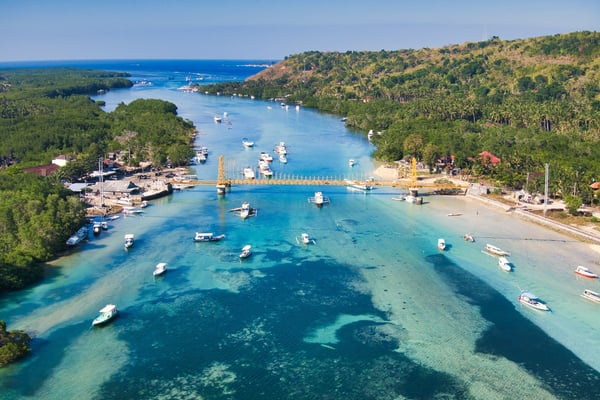
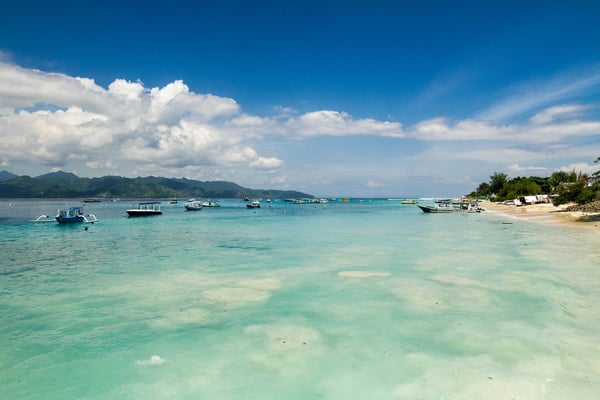
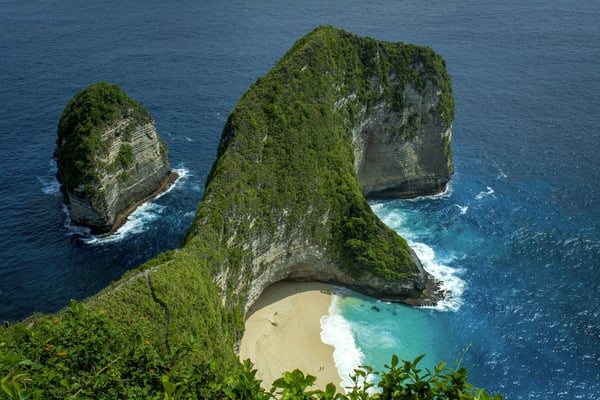
Three islands lie off Bali's southeast coast: Nusa Penida, Nusa Lembongan and Nusa Ceningan. Nusa Penida is the largest, at about 247 square kilometers, with rough, hilly roads and famous cliff viewpoints. Nusa Lembongan is small, about 8 square kilometers, and a bridge for walkers and motorbikes links it to tiny Ceningan.

Getting to them

The islands are reached by boat, mainly from Sanur. Travel guides give the crossing from Sanur as roughly 30 to 45 minutes; check with the operator, since we have no official schedule. A boat is the one link in a Bali trip that depends on the sea.

What this decision actually sits inside

Notice what happened across all of this. Describing the regions kept running into distance. The beaches and the rice terraces are in different regions. The surf, the temples, the diving and the quiet are in different regions again. No single base reaches all of them without long days on the road, so knowing the regions leads straight to a harder question: which ones, and from where.

How the regions combine into a workable set of bases is worked through in Bali, in Its Own Time.

FAQ

What are the main areas of Bali?

South Bali with its beach resorts, Ubud and the central hills, East Bali, North Bali, West Bali, and the southeastern islands of Nusa Penida, Lembongan and Ceningan.

How big is Bali?

About 89 miles from east to west and 50 miles from north to south.

Which part of Bali has the beaches?

The south has the main resort beaches, on both the west-facing and east-facing coasts. The east and north have quieter black sand beaches.

Is Ubud near the beach?

No. Ubud is inland in the central hills, about 14 miles by road from Sanur on the coast.