Food Allergies and Dietary Needs in Bali: How to Ask
Shrimp paste, peanuts and pork hide in Balinese dishes. The Indonesian phrases to use, how to ask, what to carry, and what to do if a reaction happens.
Editorial Written and checked for American travelers
Eating in Bali with a food allergy or dietary restriction is manageable and needs more care than at home. The main risks are hidden ingredients: shrimp paste ground into spice bases, peanuts in sauces, and pork in dishes that look vegetarian. Carry a written card in Indonesian, say "Saya alergi akan" followed by the food, bring your own medication, and know where you would go in an emergency.
Why allergies are harder here
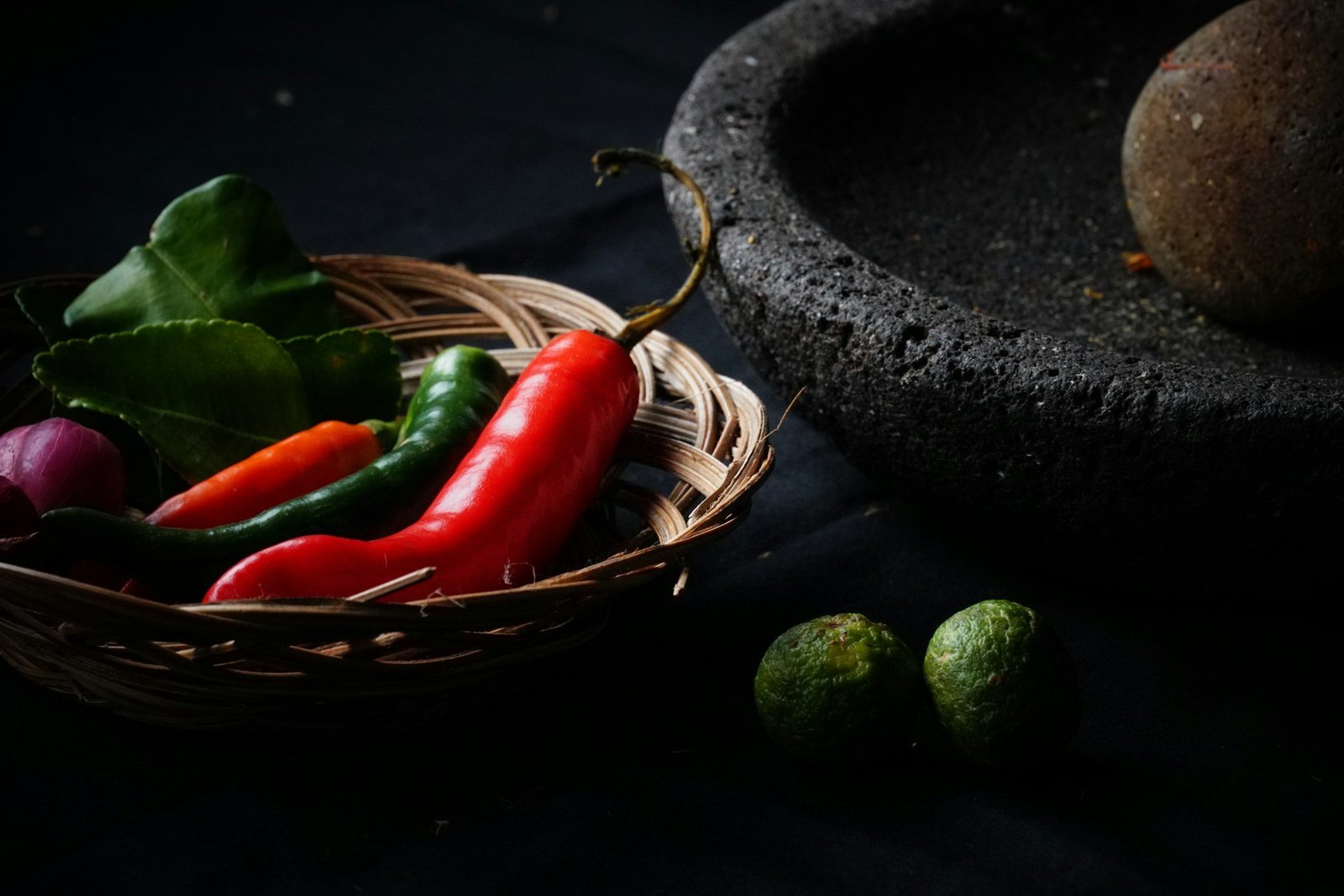
Food allergies are harder to manage in Bali because the ingredients that cause trouble are often invisible. Balinese cooking starts from a spice paste that usually contains shrimp paste. Peanuts are used in sauces. Coconut milk is in many dishes. None of these is listed on a menu, and a cook may not think to mention them.
No labeling you can rely on
We have found no official source on allergen labeling rules for restaurants in Indonesia, so we describe none. Our advice is to assume there is no labeling, to ask every time, and to treat a confident "no problem" with the same caution as no answer at all.
Cross-contact
A small kitchen uses the same oil, the same wok and the same mortar for many dishes. A dish made without peanuts may still have touched them. For someone with a severe allergy, that matters more than the recipe. Tell the staff the allergy is serious and ask whether the dish can be cooked separately.
The common hidden ingredients
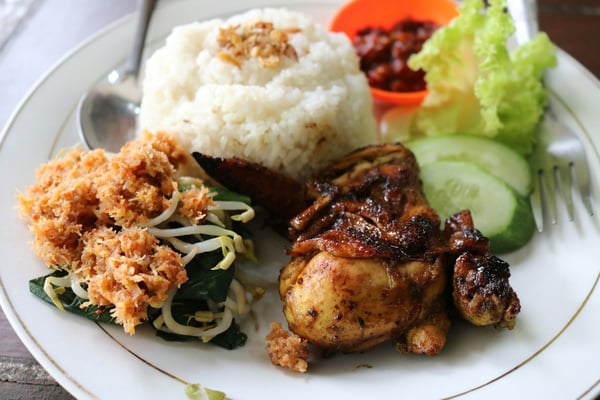
Four ingredients account for most surprises in Balinese food: shrimp paste, peanuts, pork and soy. Each is ordinary in the local kitchen, and each can be present in a dish that gives no sign of it. Knowing where they hide is most of the work.
Shellfish and shrimp paste
The basic Balinese spice paste usually includes shrimp paste, and it is the foundation of many meat, fish and vegetable dishes. A plate with no seafood on it can still contain shellfish. Anyone allergic to shellfish should ask about the paste in every cooked dish, and "udang" is the word for shrimp.
Peanuts and nuts
Peanuts appear in sauces, most obviously with satay and salads. The Indonesian word "kacang" covers peanuts and is also used for other nuts and for beans, so the word alone can cause confusion. Be specific, and show a picture if you can. Fried foods may be cooked in shared oil.
Pork
Pork is central to Balinese cooking, as meat, as sausage, as rind mixed into vegetable dishes and as stock. Travelers who avoid pork for religious or other reasons should say so plainly: "Saya tidak makan babi" means I do not eat pork. Do not assume a vegetable dish is free of it.
Soy, gluten and dairy
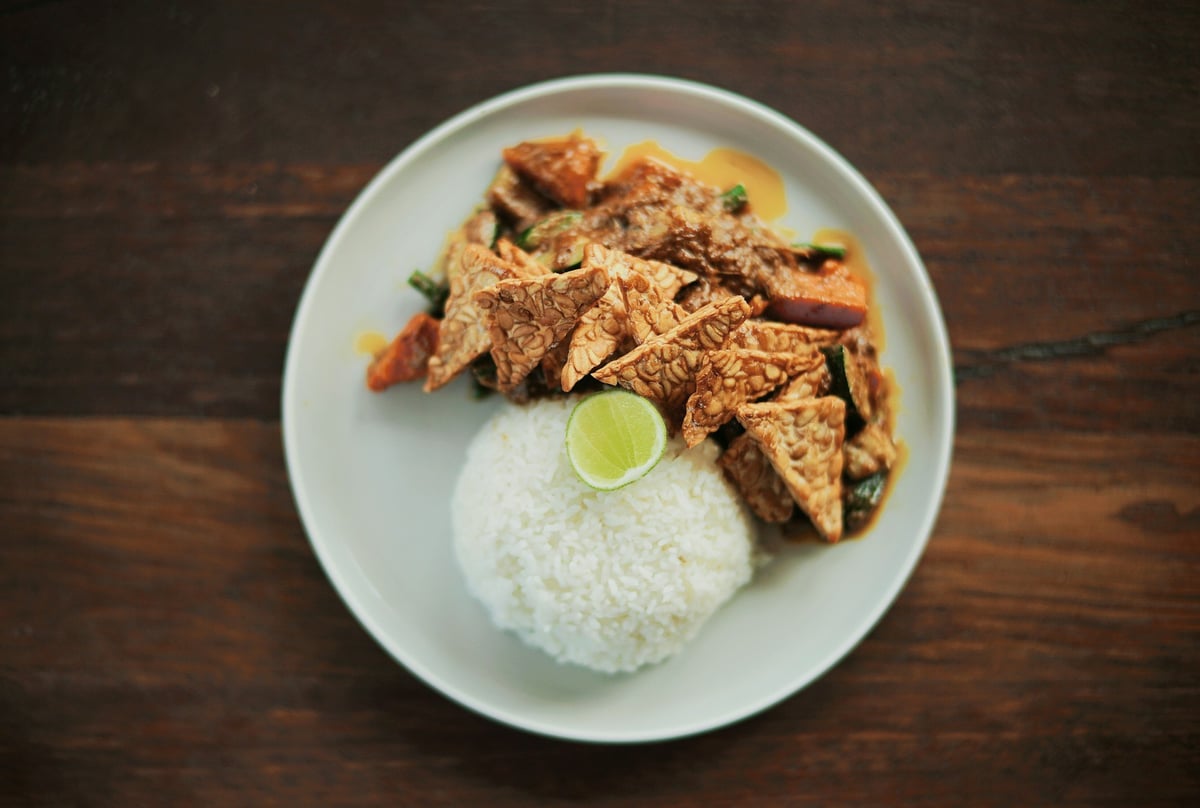
Tofu and tempeh are made from soybeans, and soy sauce is widely used in Indonesian cooking. Anyone avoiding gluten should ask about soy sauce, which is commonly brewed with wheat. Dairy is uncommon in traditional Balinese dishes, where coconut milk does the same work, and common in cafes that cater to visitors.
How to ask
Asking clearly, in Indonesian, is the most useful thing a traveler with a dietary need can do. A few phrases cover most situations. Say them, and also show them written down, since a noisy restaurant and an unfamiliar accent make spoken requests easy to mishear.
The phrases
"Saya alergi akan ..." means I am allergic to ...
"Saya tidak makan ..." means I do not eat ...
"tanpa ..." means without ...
"Saya vegetarian" means I am vegetarian.
"tidak pedas" means not spicy.
The words for foods
kacang: peanuts (also nuts and beans)
udang: shrimp
hasil laut: seafood
telur: egg
susu: milk
babi: pork; sapi: beef; ayam: chicken; ikan: fish
Carry a card
Our advice is to carry a printed card in Indonesian that states your allergy, says that it is serious, and lists the ingredients to avoid. Have it checked by a fluent speaker before you travel. A phrasebook sentence is a start and is no substitute for a card written for your condition.
Vegetarian, vegan and other diets
Vegetarians and vegans eat well in Bali. Tofu, tempeh, vegetables and rice are everyday foods, and restaurants that cater to visitors are used to the request. The caution is the same as for allergies: a dish without visible meat may be built on shrimp paste or meat stock.
Halal and kosher
Because pork is so widely used in Balinese cooking, travelers who keep halal should ask at each place and should look for restaurants that state they are halal. We have no source on kosher food in Bali and describe none; travelers who keep kosher should plan to rely on vegetarian and packaged food.
Children
A child with an allergy needs every one of these steps taken by an adult, every meal. Pack familiar snacks for the journey and for days out. Choose accommodation with a kitchen or a restaurant willing to cook plain food to order, and speak to them before you book.
Medication and emergencies
Bring your own medication, and enough of it. The State Department says prescription medication should be carried in its original packaging with the prescription and a doctor's letter, and declared on the arrival card. It warns that counterfeit medication is common in Indonesia, so do not plan to replace an auto-injector there.
Import rules
Indonesia limits how much medicine a traveler may bring. Prescription medicine is allowed up to 90 days' use for prescribed medicine, backed by the prescription. Carry auto-injectors in hand luggage, with the paperwork, and keep them with you on days out.
If a reaction happens
Use your medication as your doctor has instructed and go to a hospital. The State Department says ambulances in Indonesia can take 45 minutes or longer and that travelers may prefer a taxi or private vehicle. The emergency numbers are 112 for the unified emergency line, 110 for police, 119 for an ambulance and 113 for fire.
Before you need it
Ask your accommodation on the first day which hospital they would send a guest to and how long it takes to get there. The State Department says hospitals often require payment or a deposit upfront. Check that your travel insurance covers your condition, and keep the assistance number in your phone.
FAQ
How do you say "I am allergic" in Indonesian?
"Saya alergi akan" followed by the food, for example "Saya alergi akan kacang" for peanuts.
Is Bali safe for people with a peanut allergy?
It needs care. Peanuts are used in sauces and kitchens share oil and equipment. Carry a written card and your medication.
Is Balinese food safe for a shellfish allergy?
Ask about every cooked dish. The basic Balinese spice paste usually contains shrimp paste, which is not visible.
Is it easy to be vegetarian in Bali?
Yes. Tofu, tempeh and vegetables are everyday foods. Ask whether a dish is made with shrimp paste or meat stock.