Balifor Americans

Bali's Waterfalls: Stairs, Entry Fees and Which Side of the Island They Are On

Bali's waterfalls sit at the bottom of valleys, so every visit means stairs. Which falls are near Ubud, in the highlands and in the north, and how to plan a day.

Editorial
Written and checked for American travelers
·5 min read·
Bali's Waterfalls: Stairs, Entry Fees and Which Side of the Island They Are On
On this page
  1. 01Where the waterfalls are
  2. 02The stairs
  3. 03Fees and what they cover
  4. 04Swimming and safety
  5. 05Planning a waterfall day
  6. 06Which waterfall for which traveler
  7. 07FAQ

Bali's waterfalls are spread across the island, and almost all of them sit at the bottom of a valley, which means steps down and steps back up. The easiest to reach are near Ubud; the most dramatic are in the north. Each charges its own entrance fee, which we do not list because fees change. Choose waterfalls by where you are staying, not by a ranking.

Where the waterfalls are

Bali's waterfalls fall into three groups by location: those around Ubud in the center, those in the central highlands, and those in the north. The group you can reach depends on your base. Ubud is about 22 miles from the airport and is the best starting point for the first group and a reasonable one for the second.

Around Ubud

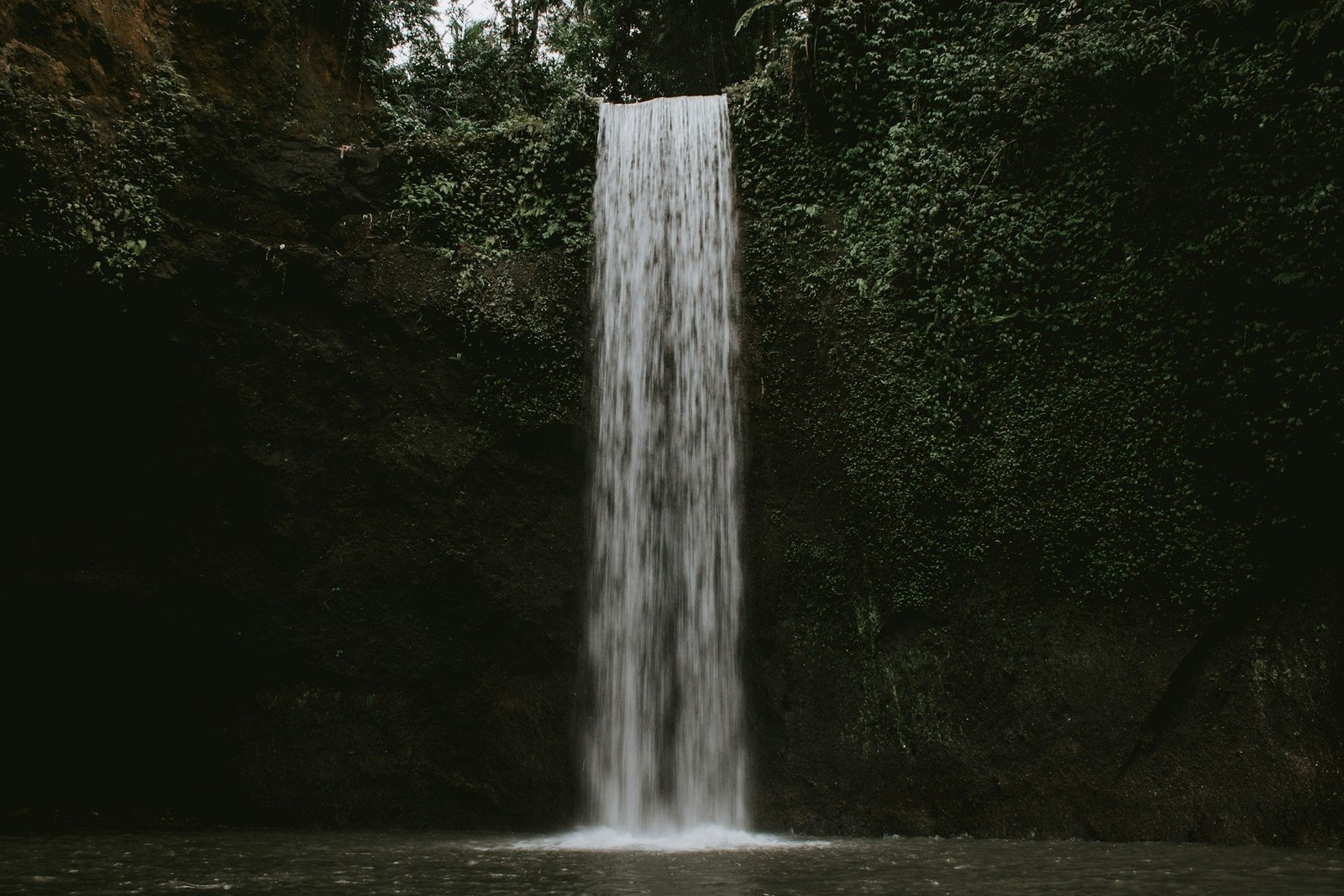
Travel guides name four waterfalls in the Ubud area. Tegenungan is about 30 meters high and described as easy to reach. Tibumana, east of Ubud, is a short walk from its parking area. Tukad Cepung is partly hidden in a cave-like canyon and known for light beams. Kanto Lampo involves wading through water for photographs.

The central highlands

Nungnung lies in a jungle ravine north of Denpasar and is reached by about 500 stone steps, according to travel guides. Further up, in the hills near the mountain lakes, are the Banyumala twin falls near Wanagiri and Munduk Waterfall, which guides call perhaps the most impressive accessible falls on the island.

The north

The north has Gitgit, described by travel guides as easy to reach, and Sekumpul, a group of several falls side by side in a jungle valley. These are a long drive from the south: Munduk is about 51 miles from the airport and Lovina about 62. They belong to a stay in the north, not a day trip from Seminyak.
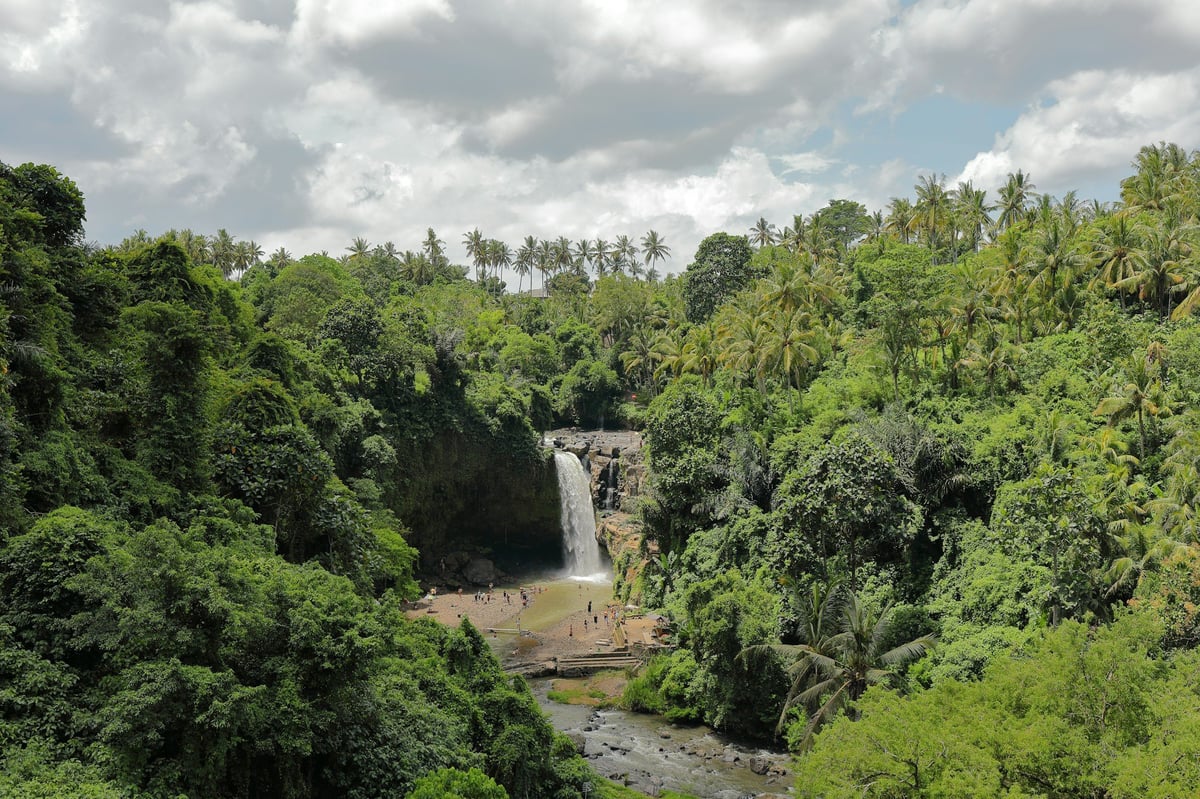
A waterfall seen across a forested valley near Ubud

The stairs

Stairs are the common feature of Bali's waterfalls. A waterfall is where a river drops into a gorge, and the parking area is at the top. The walk down is easy and the climb back is hot work in humid air. Nungnung's roughly 500 steps are the best-known example, and it is far from the only one.

Who should think twice

Travelers with knee problems, heart conditions, small children or limited mobility should ask how many steps a waterfall involves before setting out. Tegenungan is described as easy to reach, and Tibumana as a short walk, which makes them the candidates for anyone who wants less climbing.

What to wear

Our advice is sandals or shoes with grip that can get wet, since steps and rocks near a waterfall are slippery. Bring swimwear under your clothes if you plan to get in, a towel, and a dry bag for your phone. Dress modestly on the way through villages, as Bali's rules for visitors ask.

Fees and what they cover

Each waterfall is run locally and charges its own entrance fee, paid at a booth near the parking area. We list no amounts, because fees change and we have no official source. Carry small rupiah notes. Parking and, at some sites, a local guide may be charged separately; ask at the booth what the ticket includes.

Guides

Some waterfalls, particularly the larger ones in the north, are visited with a local guide. We have no official source on where a guide is mandatory, so we state no rule. Ask at the ticket booth, and agree the price before you start walking.


Swimming and safety

Swimming is the reason many people visit a waterfall, and conditions vary by site and by day. We have no official source on water safety at any of them and call none safe. Heavy rain upstream can raise a river quickly. Our advice is to stay out of the water after heavy rain and to follow what local staff tell you.

The wet season

Waterfalls are at their fullest in the wet season, from about November to March, when south Bali's climate record shows 9 to 14 inches of rain a month. That is also when paths are muddiest and water is brownest. The dry season gives clearer pools and easier paths, with less volume.

Water quality

The CDC advises travelers in Indonesia to avoid swimming or wading in water that may be contaminated after flooding. Keep your mouth closed in the water, cover any cuts, and wash afterward. This matters most after rain.

Planning a waterfall day

A waterfall day in Bali works when the falls lie in one direction. Travel guides suggest a route through the Ubud group in a single day. We give no drive times. Our advice is two or three waterfalls, since each one involves a walk down, time at the water and a climb back.

Go early

Our advice is to start early. The best-known waterfalls near Ubud draw many visitors, and the first hours of the day are the quietest and the coolest for the climb back. A driver booked for the day can plan the order to suit.

Combine with what is nearby

A waterfall pairs naturally with something else in the same direction: rice terraces north of Ubud, the mountain lakes near Munduk, or a temple. That makes better use of a driver's day than three waterfalls in a row.

Which waterfall for which traveler

The right waterfall depends on your base and your legs. These are our own suggestions: Tegenungan or Tibumana for an easy visit from Ubud; Tukad Cepung for photographers; Nungnung for those who do not mind the steps; Munduk and Banyumala for a stay in the highlands; Sekumpul for a stay in the north.

Getting there

A car with a driver is the practical way to reach waterfalls, which lie off main roads. A scooter on steep, wet lanes is harder riding than in town, and requires a license matching the type of vehicle driven.

FAQ

What is the easiest waterfall to visit in Bali?

Travel guides describe Tegenungan, near Ubud, as easy to reach, and Tibumana as a short walk from its parking area.

How many steps is Nungnung waterfall?

About 500 stone steps, according to travel guides.

Do Bali waterfalls charge an entrance fee?

Yes, each charges its own fee at a booth near the parking area. We list no amounts because they change.

Can you swim at Bali's waterfalls?

At some. We have no official source on water safety, so ask local staff, and stay out after heavy rain.

Keep planning
Not sure how it all fits together?

Pick your trip length and we'll route a real day-by-day plan.

Build your trip →